

There are many more strange and amazing animals out there. Here are some more of them:
The Patagonian Mara:
The patagonian mara, while it looks like a rabbit or a deer, is a rodent. This thing is a relative of the rat. Although it behaves very unlike one. The mara is diurnal, meaning it’s active during the day. It spends long periods just laying down, soaking up sunlight while still very aware of it’s surroundings. It’s able to run up to 145 mph. To put that into perspective, the top speed of peregrine falcon is 220 mph. Overall a very strange and unique animal.
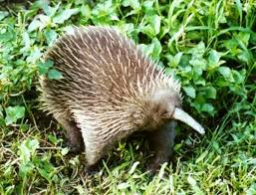
The Echidna:
The echidna looks like a fusion of a hedgehog and a duck, but is a very fascinating animal. It is one of the few species of mammals that lay eggs. The only other one that does is the platypus. It has a small face, with small eyes and a long nose that looks like a beak. The beak has nostrils that help it smell. It can’t see very well but it has an amazing sense of smell and hearing. Just like a hedgehog it’s covered by spines that protect it from predators. It is a good digger as well. It’s feet are specifically designed to be able to skim the ground for bugs to eat or to dig straight into the ground.
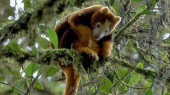
The Tree Kangaroo:
The tree kangaroo only weighs 15-22 pounds, which is significantly lighter than the average weight of a red kangaroo (40-88 lbs for females and 121-198 lbs for males). They live in Australian forests, 11,000 feet in the air. They are also very good at jumping, being able to jump from 60 feet in the air to the ground with no damage done to it. It even has a special kind of back that lets water run right off of it if it rains. Overall a very fascinating species of a very fascinating animal
The Meerkat:
The meerkat is a very social animal. They live in communities of up to 40 individuals and they all help in getting food, consisting of small insects such as beetles and caterpillars, using their extremely good sense of smell to find them. They can also eat much larger things such as fruits or eggs. One will get onto high ground and function as a sentry, squealing if it spots a predator coming nearby. When the sentry squeals, all the meerkats run into holes called boltholes that they have dug. If cornered they will stand together, raise their hairs, lean forward and hiss, which can sometimes scare off predators.
The Gharial:
The gharial is a relative of the crocodile. It’s relatively large, its length being 8.9-16 ft. when fully grown, and it also has a long, narrow snout. The snout is good for catching prey because water doesn’t resist it, letting it catch prey a lot easier. It’s also not very strong, when fully grown it can’t even lift its own body fully off the ground. However it is very fast and very deadly.
The Thorny Devil: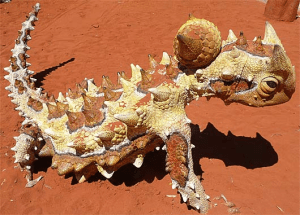
The thorny devil is a species of lizard that is covered with scales that look like thorns. There are small openings between the thorns, which draw in and collect water, which is an extremely useful adaptation inside the dry environments where they live. The thorns also make it hard for predators to actually digest them, and they could potentially use the scales as camouflage. They eat a lot of ants, up to five thousand on a single hunt. They eat the ants by using their long tongue.
The Hagfish:

The hagfish is a marine creature that looks like an eel. In fact they are sometimes called slime eels, although they are not eels. It uses tentacle-looking things that function like antennae, usin
g them to sense their surroundings and find food. When they find their food, they bury into it and eat it. Some species live in shallow water, while others live 5,500 feet into the ocean. An ancient hagfish fossil from 300 million years ago was, oddly enough, almost the same as modern-day hagfish, meaning that their method of obtaining food is very successful, both back then and now. They can actually produce slime too. When they are threatened, it produces a slime-like substance that expands into a very sticky substance to try to get out of sticky situations. They can actually sneeze out the slime if it gets in it’s mouth to prevent choking. And finally, they have no real bones. They have a skull made of cartilage, but they don’t have a spinal cord or a skeleton, so no one knows whether they are vertebrae or invertebrate, or some new category in between. What we do know is that the hagfish is a very strange and amazing creature.
The Yeti Crab: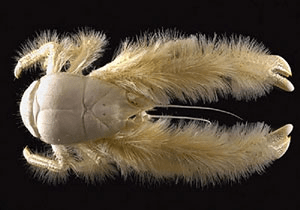
The yeti crab was discovered relatively recently. In 2005, a team of scientists off the coast of Easter Island discovered a new species of crab with hair on it’s claws. It is kind of related to a normal crab, but it’s unique characteristics don’t fit within any of the previously defined crustacean groups. It lives in deep-sea heat vents and eats the muscle tissue of mussels. Where they were discovered, many species live, but they haven’t been found elsewhere, so they most likely can’t live in other regions.
The Pink Fairy Armadillo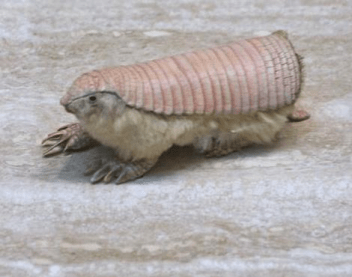
The pink fairy armadillo is currently the smallest species of armadillo, ranging in size from 90-115 millimeters in length and weighing less than a pound. They live in the deserts of Argentina and can dig a hole for themselves extremely fast – it only takes a few seconds for them to completely bury themselves because of their front claws being adapted to digging fast. They dig almost like swimming, and their small size makes this possible. They get food by burrowing right next to an ant nest, which provides a reliable food source. It is a very solitary creature, sleeping underground during the day and eating at night.
Bibliography:
- http://www.arkive.org/patagonian-mara/dolichotis-patagonum/
- http://blogs.bu.edu/biolocomotion/2011/12/12/why-can-the-peregrine-falcon-fly-so-fast/
- https://en.wikipedia.org/wiki/Echidna
- http://animals.sandiegozoo.org/animals/echidna
- http://www.nationalgeographic.com/animals/mammals/m/matschies-tree-kangaroo/
- https://en.wikipedia.org/wiki/Red_kangaroo
- http://mnzoo.org/blog/animals/matschies-tree-kangaroo/
- http://www.nationalgeographic.com/animals/mammals/f/fossa/
- http://kids.nationalgeographic.com/animals/meerkat/#meerkat-group.jpg
- http://www.arkive.org/gharial/gavialis-gangeticus/
- http://www.factzoo.com/reptiles/lizards/thorny-devil-lizard.html
- http://www.smithsonianmag.com/science-nature/14-fun-facts-about-hagfish-77165589/
- http://www.dailymail.co.uk/sciencetech/article-3406314/Now-disgusting-Secret-hagfish-slimes-predators-death-revealed-used-nappies.html
- http://www.coml.org/discoveries/discoveries/new_species/kiwa-hirsuta.htm
- http://savepangolins.org/what-is-a-pangolin/
- https://a-z-animals.com/animals/pink-fairy-armadillo/
 Grover Middle School's Jagazine
