

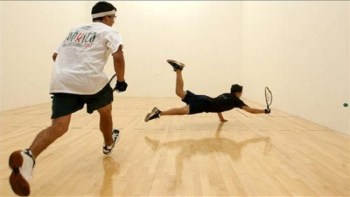
 You stand at the back of the red service box, glaring at your opponent who stands at the other side. Sweat falls from your soaked hair, shining like jewels on your burning face. The match is close: so close you feel the rush of victory and the slow death of defeat all at once. However, you know you are on the back foot, and your head floods with visions of loss. You clutch your metal racket at these thoughts: knowing fully well that these debilitating visions could be the difference between winning and losing. You wipe your hand on the wall, giving yourself a few more seconds to recover your composure. However, you know you don’t have much time. After all, the most you ever get between rallies is five seconds.
The moment you ready yourself behind the crimson square, your opponent serves. The small squash ball shoots towards you. You have three milliseconds to react. Any untrained player – stunned by the sheer speed of the ball – would dive or fall to the ground in a confused daze. But you are not untrained. You are seasoned, experienced, and you know what to do. When you reach the ball, you smack it hard, across the court. Your opponent is stunned. He dives in the back of the court, spreading his wings for a second as he athletically jumps towards the ball. His response is weak, coming high in the front of the red box you were standing behind earlier. You now have at least two seconds to strike the high ball, and your opponent is behind you and under pressure. He knows that he has to sprint his hardest without fail to reach your next shot if it is good. You play a dropshot: hitting the ball with the deftest of touches. The ball flutters just above the out line, and your opponent is worried. He is struggling, and does the splits to recover the ball. Using his impeccable core strength to stand up in the span of five milliseconds, he bolts back behind you as you prepare to hit his return. You smash another incredible ball behind the service box, and even with the fastest sprint in the world, recovering the perfect shot is impossible to recover. Your opponent grudgingly hands you the ball, and finally acknowledges the war that has begun.
Two mighty rallies later, you stand at the service box holding a match ball. It is 13 to 14 in the fifth game: one of the closest score lines there can be in the game of squash. Twenty-seven grueling rallies of sprinting over one-hundred-fifty meters with no break and using lots of core strength and agility is necessary. In the entire match you have played one-hundred-seven rallies: no wonder your lungs burn so. Before you serve, you close your eyes and hope. You hope you win the encounter, and you wish for this physical and emotional pain to end.
You serve the ball.
Your opponent hits your serve hard, and this time you are under pressure because of his speed. Your conscience is telling you to strike: to play a risky shot. Just finish it! it says. You don’t listen. You know squash is like gambling: you need to know when to take risk and when to play safe. You crush the ball to the back corner: electrifying torrents of adrenaline seeping through your veins. In any normal situation this amount of hype and energy would scare you: but this is no everyday situation.
This is squash.
 Grover Middle School's Jagazine