

Among Earth’s creatures exist certain ones that are unlike any other. From having extreme survival skills to just plain looking weird, these creatures can be very interesting.
The Axolotl: 
The axolotl, a species of salamander native to Mexico, is a unique animal for many reasons. First of all, just look at it. It also has extremely effective restoration powers; it can even regrow a limb if it loses one. Most notably, however, it doesn’t fully undergo metamorphosis like other amphibians. It doesn’t develop lungs and so lives in the water for its entire life, and so doesn’t develop adaptations like eyelids to survive to life outside water. They are actually popular pets in some areas of the world, despite appearances.
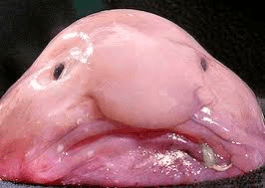
The Blobfish:
A very unique species of fish, the blobfish can be very repulsive to some people. This creature is very passive. It simply floats near the bottom of the ocean and eats anything that happens to float into it’s mouth. However, it can’t actually go find food for itself. That’s about all it does. Because it lives under the radar (quite literally) we don’t currently know much about it.
The Dumbo Octopus:
The dumbo octopus isn’t actually a species, but rather a group of 17 different octopus species with unique characteristics. They have fins that they use to propel themselves through the water (which look like Dumbo the Elephant’s ears.) They can also expel water through their funnel for a speed boost, which can be useful for escaping predators. They, like the blobfish, live in very deep ocean habitats, and are about 9-12 inches long. Unlike other species of octopi, they swallow their prey whole
The Eastern Glass Lizard:
The eastern glass lizard has no legs. It is not a snake, even though it is legless because it has eyelids, external ears and can’t stretch their jaw as far as a normal snake could. Therefore it is a lizard. Found in the southern U.S, they can break their tail off to distract predators (hence the name) although it grows back slowly over the course of several months.
The Peacock Mantis Shrimp: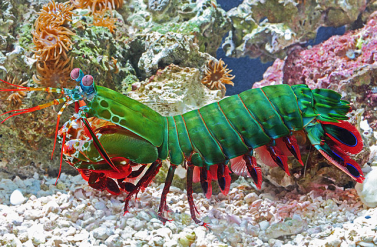
The peacock mantis shrimp is a species of shrimp that is very striking, in multiple ways. In addition to their appearance, they live on the ocean floor inside crevices of coral and rock, and are very protective of their homes. Even though they’re only about 2-7 inches long, if attacked it uses it’s fist-like arms to attack the intruder at the speed of a .22 caliber bullet, about 50 times the speed of a blink of an eye. Truly faster than a speeding bullet. And it is strong enough to break the shell of a crab, so it can deal quite a bit of damage.

The Sunda Flying Lemur:
The sunda flying lemur is not a lemur (it is a colungo, meaning a gliding primate) and it can’t fly either. They spend their live in trees in southeast Asia and, similar to a flying squirrel, can glide from tree to tree. Fully stretched out they have a wingspan of 70 cm (27.5 in) and are able to fly over 100 meters without stopping. They sleep during the day by grasping branches with all of their feet.
The Lamprey:
The lamprey is a type of fish that looks kind of like an eel, but aren’t. They eat in a rather disturbing manner. They latch onto another species of fish, make a hole and suck fluids out of them for quite some time, lasting from a few days to several weeks. Depending on the size of the original fish it may or may not survive an attack. They live in the northern Atlantic coast and in the Great Lakes. Moving on…
The Sea Cucumber:
The sea cucumber (which is, oddly enough, an animal) is a classification of over 1,000 species of underwater creatures that happen to look like the plant (which apparently is a fruit). They eat tiny drifting particles like algae and collect them using the tentacle-like feet at the end of their mouth. They then proceed to break down the particle. They can shoot threads at anything that threatens it in an attempt to wrap it up. If things get really dire, they can actually shoot out their essential organs and regrow the leftover parts.
The Tardigrade:
Finishing off the list strong, the tardigrade (also called the “water bear” or “moss piglet”) is about 1.2 mm long and is practically indestructible. It can survive extreme temperatures (-328° F to 304° F) freezing and thawing out, a lack of oxygen and/or water, very high levels of radiation (1,000x that which would kill a human), outer space, extremely high pressure (6x that of the bottom of the ocean) and more. They do this by a process known as cryptobiosis. What that does is that all activity in it’s body that requires energy is slowed down considerably. This allows it to survive these extreme conditions, and to last for decades without basic resources.
Bibliography:
- http://www.axolotl.org/
- http://www.theinertia.com/environment/crazy-creature-of-the-week-the-blobfish/
- http://www.discovery.com/dscovrd/wildlife/meet-the-blobfish/
- http://www.aquariumofpacific.org/onlinelearningcenter/species/dumbo_octopus
- http://srelherp.uga.edu/lizards/ophven.htm
- http://serc.carleton.edu/microbelife/topics/tardigrade/index.html
- https://aqua.org/explore/animals/mantis-shrimp
- http://www.bbc.com/earth/story/20150313-the-toughest-animals-on-earth
- http://www.animalplanet.com/tv-shows/blood-lake/all-about-lampreys/what-is-a-lamprey/
- https://en.wikipedia.org/wiki/Sunda_flying_lemur
- http://animaldiversity.org/accounts/Galeopterus_variegates/
- https://en.wikipedia.org/wiki/Colugo
- http://animals.nationalgeographic.com/animals/invertebrates/sea-cucumber/
 Grover Middle School's Jagazine